A delegate of the Registrar has accepted ITC Limited’s trade mark application for Sunfeast Dark Fantasy Fantastik & device (Application No. 2466417) in class 30, rejecting the examiner’s s 44 objection in its entirety. The decision — 2026 ATMO 31 — is a useful reminder that examination is not the final word, and that the quality of reasoning behind an adverse report matters as much as the conclusion it reaches. In this case, the delegate concluded that the examiner’s reasoning was found wanting in at least two significant respects.
The Background
ITC Limited applied in July 2024 to register the composite mark Sunfeast Dark Fantasy Fantastik (with a device; below) for a broad range of Class 30 goods including chocolates, wafers, biscuits, cookies, cakes, pies, and confectionery. Here is ITC’s mark:
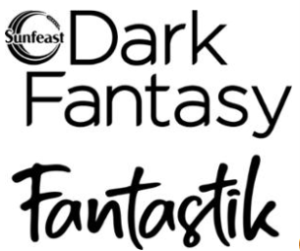
IP Australia issued an adverse examination report based on eighteen (18) prior registrations owned by Clearlight Investments Pty Ltd, each featuring the word FANTASTIC – used across a range of food products including crackers, biscuits, pasta, and rice snacks that overlapped with ITC’s application. Here is how FANTASTIC is depicted in 16 of Clearlight’s prior marks – mainly in conjunction with other words, devices, and/or figurative elements:

The Examiner’s position, in summary, was that FANTASTIK was essentially merely FANTASTIC with a different spelling, that FANTASTIC was a key feature of all the prior marks, and that consumers would likely be confused.
The Examiner maintained the deceptive similarity objection through a second report, and ITC requested a hearing before a delegate.
The Examiner’s first misstep: Confusion is about the marks — not the competitor’s reputation
One of the examiner’s key arguments was that Clearlight had been using the word FANTASTIC on its goods for 24 years, and that all of Clearlight’s marks together formed a “family.” The implication was that this long history made confusion more likely. The delegate rejected this reasoning, and rightly so as set out by The High Court of Australia.
Under Australian trade mark law, the question of whether two marks are likely to cause confusion is answered by comparing the marks themselves — not by asking how well-known the prior owner is, or how long they have been in business. A competitor’s reputation or commercial history is simply not relevant to the analysis. The High Court confirmed this in Self Care IP Holdings Pty Ltd v Allergan Australia Pty Ltd in 2023.
That is, an examiner cannot legitimately use the commercial success or longevity of a prior mark owner to bolster a deceptive similarity objection. If the marks are not confusingly similar on their face, the fact that the prior owner has been in business for decades does not change that outcome.
The Examiner’s second misstep: Overweighting a Descriptive Element
The Examiner’s core reasoning — across both adverse reports — was that FANTASTIC was “a key feature of all the marks” and that FANTASTIK, as the phonetic equivalent, was therefore too close for comfort. The examiner acknowledged differences between the marks but concluded those differences were “not enough to avoid confusion in the marketplace.”
The difficulty with this analysis is that it treats FANTASTIC as though it were an inherently distinctive word — the kind of strong, memorable element that dominates a consumer’s recollection and overwhelms surrounding components. That is, the Examiner treated FANTASTIC — and by extension FANTASTIK — as though it were the dominant, memorable feature that consumers would latch on to and carry with them into a future purchase decision.
However, FANTASTIC is a common English word. It means “incredibly great, very good, wonderful.” When it appears on food packaging, it is telling you the food is great — not who made it. Words like that are described in trade mark law as laudatory or descriptive, and they are afforded a lower level of protection precisely because other traders have a legitimate interest in using positive, everyday language to promote their goods.
The delegate put it plainly: because FANTASTIC has low inherent distinctiveness in the context of food products, its mere presence in two marks does not make those marks confusingly similar. Moreover, Clearlight’s monopoly was over a specific stylised version of the word — rendered in a particular script on an angled parallelogram — not over the word FANTASTIC itself in any and all forms.
ITC’s mark, by contrast, presented FANTASTIK in a different stylised script, surrounded by other prominent elements including SUNFEAST, DARK FANTASY, and a circular device. Taken as a whole, the marks looked different, sounded different, and created a different overall impression. The risk of a consumer confusing the two was, in the delegate’s view, remote.
The Delegate’s Approach
In contrast, the delegate approached the comparison of the prior marks and the applied-for mark as wholes — visually, aurally, and conceptually — and gave appropriate weight to the full composition of ITC’s mark, which includes the well-known words DARK FANTASY, the smaller invented word SUNFEAST, and a circular device. Those are not minor embellishments. They are prominent elements that a consumer would notice and recall.
The delegate also identified that the Clearlight’s prior marks’ monopoly attaches to a specific stylised form — the word Fantastic rendered in a particular fancy script on an angled parallelogram — not to the plain word Fantastic. ITC’s mark does not use that stylisation. The delegate concluded that a notional consumer would understand that FANTASTIC only denotes Clearlight’s trade source when presented in that specific form.
The outcome was the delegate concluding that there was no real or tangible risk of confusion between Clearlight’s marks and the ITC’s mark.
A Practical Takeaway
This decision is a useful illustration of what can go wrong at the examination stage when the deceptive similarity framework is applied against established law and practice. Two particular risks stand out.
The first is the importation of reputation-based reasoning into a mark-vs-mark comparison. Clearlight’s 24 years of commercial use is a compelling fact, which may have swayed the Examiner’s assessment. However, The High Court of Australia has established that reputation has no place in the deceptive similarity inquiry, and allowing reputation to influence the analysis will potentially distort the assessment and result.
The second is the failure to interrogate the inherent distinctiveness of the element shared by the competing marks. Not all common elements are equal. A shared descriptive term is a very different from a shared invented word, and the weight given to each in the comparison should reflect that difference.
This is one of the most important points from the Sunfeast decision. The protection attached to a registered trade mark extends to the mark as registered — not to every word or element it happens to contain.
If the prior mark is a composite or stylised mark, the owner’s monopoly is over that specific form.
Where an adverse report rests on either of these errors, applicants should feel confident pushing back — and, if necessary, requesting a hearing. As this decision confirms, the examiner’s view is not binding, and a delegate will assess the matter afresh.
The Sunfeast Dark Fantasy Fantastik decision is not a landmark case, but it is a well-reasoned one. It demonstrates that the deceptive similarity framework, properly applied, provides meaningful protection against over-broad objections — and that the hearing process exists precisely to correct the kind of analytical errors that can creep into examination.
(This article provides general information only and does not constitute legal advice)